


Why Many Business Analysts Are Struggling to Land Jobs in 2026 (And What They Must Do to Stay Relevant)

The Business Analyst Role Isn't Dying—But It Is Being Redefined: Business Analyst career 2026

If you're a Business Analyst applying for jobs in 2026 and wondering why interviews have become harder, you're not alone.
Thousands of experienced Business Analysts are discovering that the market has changed dramatically. Roles that once required three or four specialists are now being handled by one AI-enabled product professional.
The challenge isn't simply Artificial Intelligence.
The challenge is that the expectations from businesses have fundamentally changed.
Organizations no longer want someone who can only gather requirements and write documentation. They want professionals who understand customers, products, business strategy, technology, AI, data, experimentation, and commercial outcomes.
The Business Analyst role is not disappearing.
Traditional Business Analysis is.
The Biggest Shift Since Agile
For years, Business Analysts were primarily responsible for:
Gathering requirements
Writing BRDs and FRDs
Creating process flows
Conducting stakeholder meetings
Preparing use cases
Supporting testing
Managing requirement traceability
These activities created enormous value.
But AI now performs much of this work in minutes instead of days.
Today's AI tools can:
Generate user stories
Produce acceptance criteria
Create process diagrams
Summarize workshops
Convert meeting recordings into requirements
Draft BRDs
Produce documentation automatically
What once differentiated a Business Analyst has become increasingly automated.
That means companies are no longer paying a premium for documentation alone.
They are paying for decision-making.
AI Didn't Replace the BA
Business Analyst career 2026 is changing. AI Replaced Low-Value Activities. This is one of the biggest misconceptions in today's job market. AI has not replaced Business Analysts.
It has replaced repetitive work. Examples include:
Documentation
Requirement formatting
Meeting notes
Requirement summaries
Process documentation
Initial backlog creation
User story generation
The value has moved higher.
Companies now expect professionals to answer questions like:
Should we build this feature?
Will customers pay for it?
What problem does it solve?
How does it improve business KPIs?
Which solution provides maximum ROI?
What should be prioritized first?
What should never be built?
These questions cannot be answered by documentation skills alone.
Companies Want Fewer Roles With Broader Capabilities
One of the biggest hiring trends in startups and product companies is role consolidation.
Instead of hiring:
Business Analyst
Product Owner
Product Manager
Delivery Coordinator
many companies now prefer hiring one professional who can perform most of these responsibilities with the assistance of AI.
That individual typically:
Talks to customers
Defines product vision
Prioritizes features
Performs business analysis
Writes user stories with AI
Tracks delivery
Measures outcomes
Owns product success
Instead of maintaining multiple specialist roles, organizations increasingly prefer multi-skilled product professionals, especially where speed and cost efficiency matter. This trend is particularly visible in startups and AI-first companies, though it is less universal in highly regulated enterprises.
Many Business Analysts Never Developed Product Thinking
This is perhaps the biggest career limitation.
Many professionals spent years focusing on:
"What did the customer ask for?"
Instead of asking:
"Why does the customer need this?"
Modern companies hire people who can answer:
What customer problem exists?
Is this problem worth solving?
What market opportunity exists?
What business metric improves?
What revenue is created?
What experiment should we run?
How do we validate assumptions?
These are Product Management questions.
Not documentation questions.
Documentation Has Become a Commodity
Writing documents used to be considered expertise.
Today AI can generate:
BRDs
FRDs
User Stories
Acceptance Criteria
UML Diagrams
Process Maps
Requirement Matrices
within minutes.
The differentiator is no longer writing.
The differentiator is thinking.
Companies Now Hire for Business Outcomes
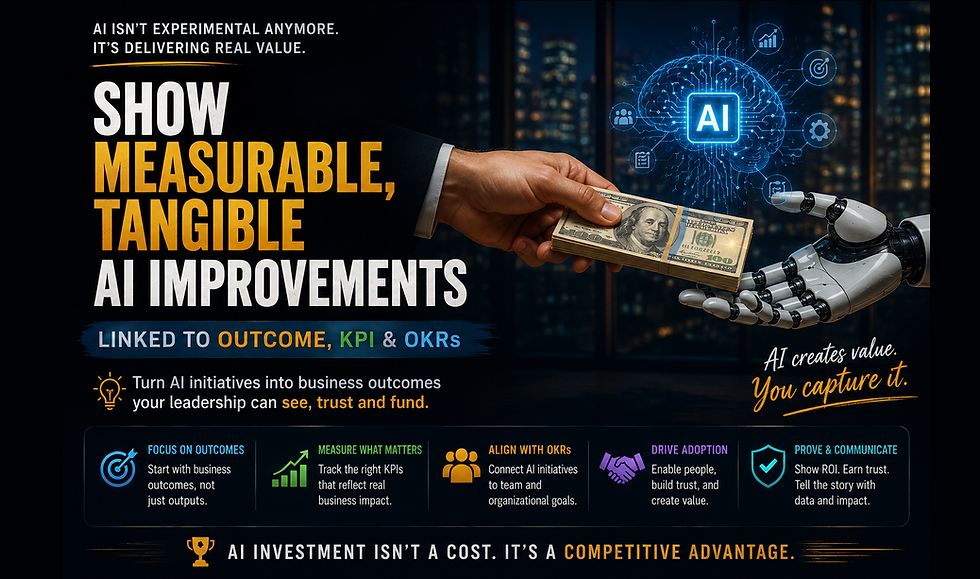
Modern organizations increasingly measure people by outcomes instead of outputs.
Old mindset:
"I delivered 120 user stories."
New mindset:
"I improved customer activation by 18%."
Old:
"I completed requirements."
New:
"I increased revenue."
Old:
"I documented processes."
New:
"I removed customer friction."
Business value has replaced documentation volume.

Checkout TheAgileFourm POPM SAFe Certification to become a successful Product Owner and Product Manager.
AI Has Raised the Skill Ceiling
Ironically, AI has not made jobs easier.
It has made expectations much higher.
Employers now expect Business Analysts to:
Use AI daily
Validate AI-generated outputs
Ask better questions
Think strategically
Make faster decisions
Understand customer behaviour
Interpret data
Build business cases
Work with Product Managers
Collaborate with engineering teams
AI has become a productivity multiplier—not a substitute for judgment.
Product Companies Think Differently Than Service Companies
Many Business Analysts built careers in IT service organizations.
Those organizations typically delivered projects for clients.
Product companies operate differently.
They ask:
Which feature creates revenue?
Which feature improves retention?
Which feature should never be built?
Which experiment validates customer demand?
Which metric proves success?
Success is measured by product performance rather than documentation quality.
Startups Cannot Afford Role Specialization
Startups optimize for speed.
Every additional role increases:
Cost
Communication
Handoffs
Meetings
Delays
Instead, startups prefer professionals who can:
Analyse
Prioritize
Prototype
Validate
Launch
Measure
One versatile product professional supported by AI often replaces several narrowly defined roles.
Business Analysts Often Stay Inside Project Boundaries
Many BAs understand:
Requirements
Scope
Functional specifications
But fewer develop expertise in:
Product strategy
Business models
Customer acquisition
Pricing
Market research
Product analytics
Growth metrics
AI-enabled workflows
This limits career progression.
The New Career Ladder
The emerging progression is increasingly becoming:
Business Analyst
↓
AI-Enabled Business Analyst
↓
Product Owner
↓
Senior Product Owner
↓
Product Manager
↓
Senior Product Manager
↓
Head of Product
↓
Chief Product Officer
Not every BA must follow this path, but professionals who add product thinking and AI capabilities generally expand their opportunities rather than narrowing them.
Skills That Will Define the Future
The Business Analysts who thrive over the next decade are likely to combine analysis with broader capabilities:
Product Thinking
Customer Discovery
Design Thinking
AI Prompt Engineering
Agentic AI Workflows
Data Analytics
Product Analytics
Business Strategy
Experimentation
Roadmapping
Prioritization Frameworks
Agile Product Delivery
Systems Thinking
AI Governance
Stakeholder Influence
Commercial Awareness
These skills move professionals from documenting work to shaping business outcomes.
The Future Belongs to Product Thinkers
Business Analysis is no longer just about gathering requirements.
It is about discovering opportunities.
The professionals who survive the AI era will not simply write better user stories.
They will build better products.
They will combine customer empathy, strategic thinking, business understanding, AI fluency, and data-driven decision-making.
The market does not need fewer Business Analysts.
It needs Business Analysts who have evolved into product leaders.
That evolution is no longer optional.
It is becoming the defining advantage of the next generation of Business Analysts.


Comments